Off and running with The Modern Maker Vol. 4!
I have finally finished the weaving of the first two fabrics for the Modern Maker vol. 4! All told, it went surprisingly fast...especially considering that I was spinning the weft as I worked -- weave a few hours, spin a few...back and forth. Toward the end it did get a little tedious. Next time, I think I'm going to spin the entire weft before I start weaving. It will make things easier.
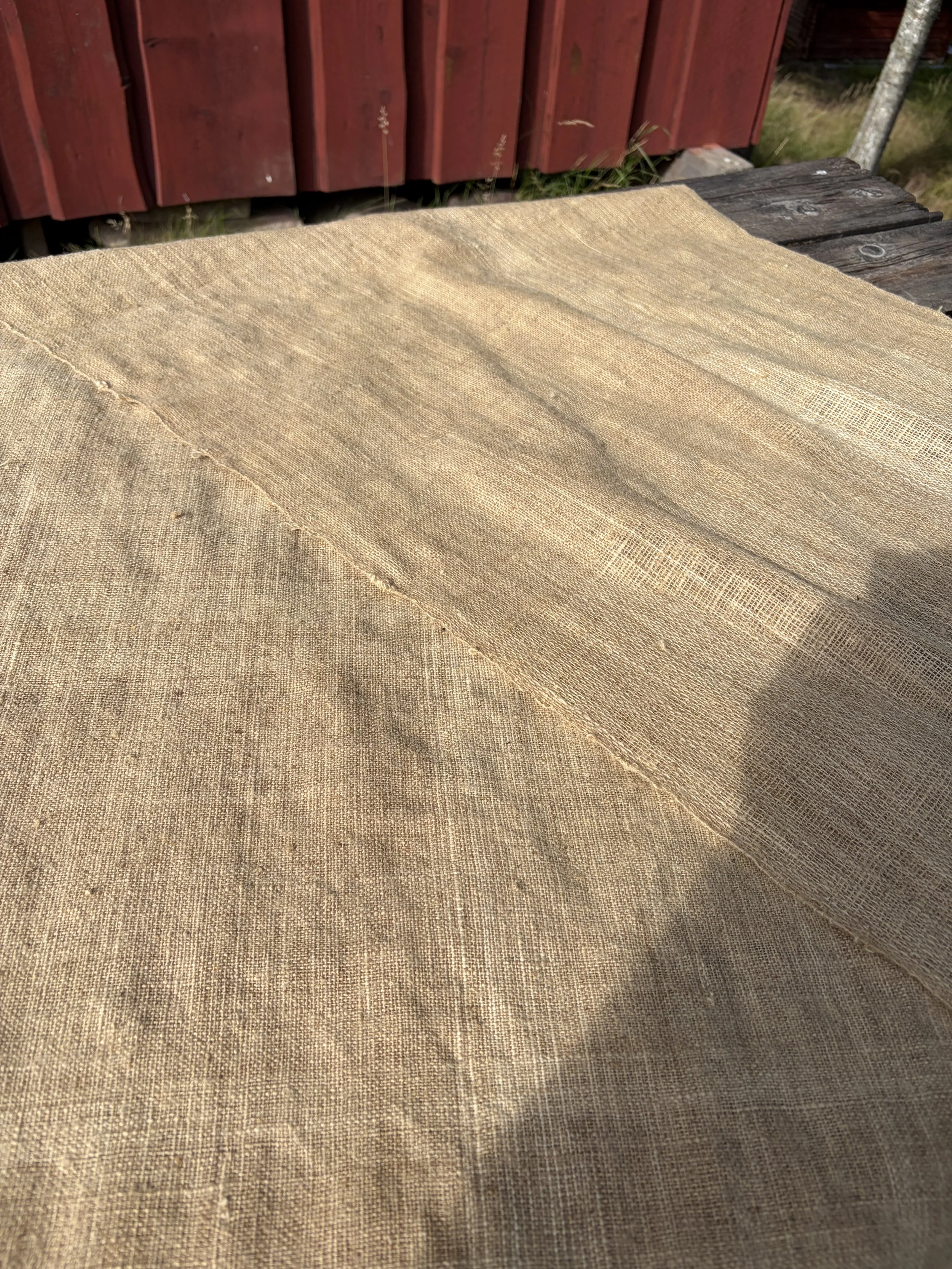
Both vadmal and russet were woven on the same warp. z-spun and in the grease. I used a sett of 6 threads per cm. I am REALLY happy to be done with the unwashed wool part of this process. I realized that I do not like spinning unwashed fleece. The weft was a little more softly spun and was spun in the opposite direction. S-spun, in this instance. Incase you missed previous discussions of the difference between vadmal and russet, vadmal is woven strictly balanced in its weave structure with 6 threads per centimeter in both warp and weft. Russet, on the other hand, is woven with an imbalanced weave structure where the weft is a little thicker and more loosely spun allowing the weft to be beaten more roughly without over-packing the picks.
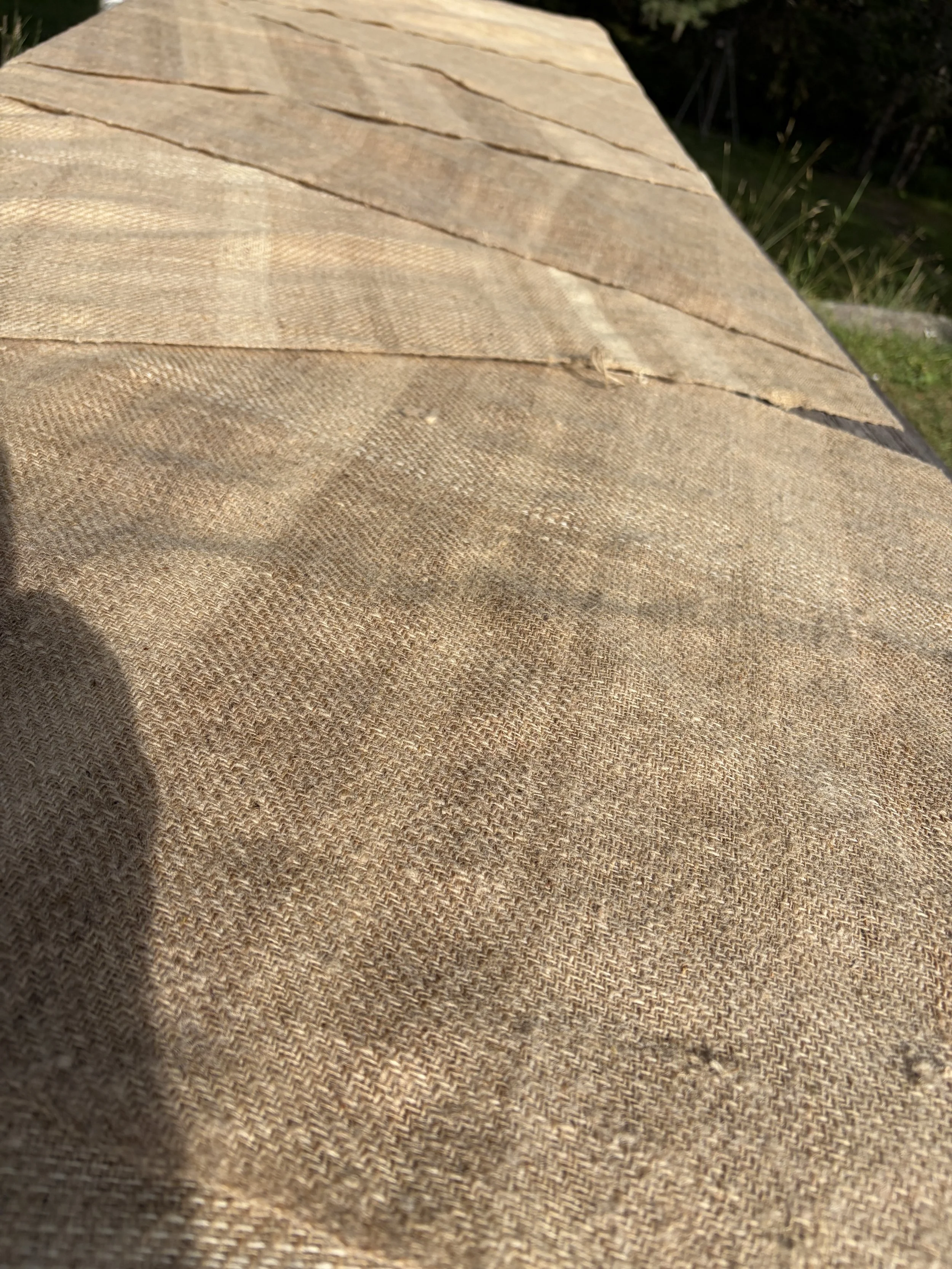
Vadmal, ready for the fulling mill
Both fabrics need to be fulled/walked. the vadmal will be thrown into an 1800s fulling mill that lies about an hour from my house. While the vadmal is in the fulling bay at the mill, I will be simultaneously working the russet with my feet in a basin with a technique that I have been working on perfecting. If all goes according to plan, they will have slightly different textures when complete but look very similar. I have yet to decide what colors they will become after fulling. These textiles are typically dyed after they are completely processed. I feel like at least one will remain white. The other...no clue. probably blue or brown. I've already have a good green chosen for the book...read on for more details.
Also managed to wash and dye the fleece for the warp of the last fabric for the book, cordellate which is often known as faille. One of the Sture suits uses a similar fabric in the puffs of the pluderhosen. And since those suits are Swedish, I figured I would forge right ahead with that cloth (which will make my growing Swedish following rather happy). The fabric will have a worsted spun warp and weft though I'm planning on dyeing the weft as yarn rather than in the wool. I have heard that dyeing in the wool gives the most even and professional result so I thought I would give it a try!
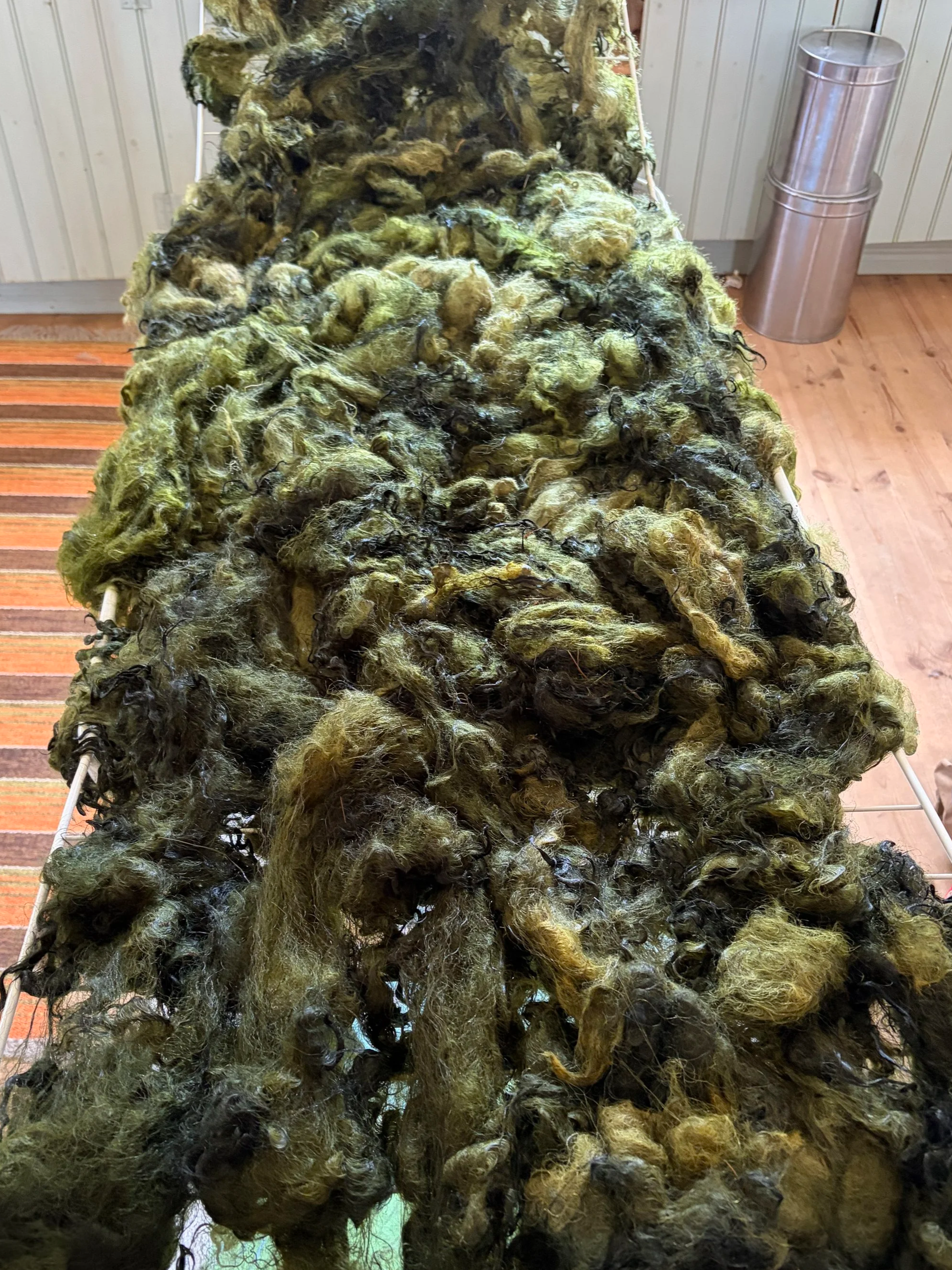
A big bunch of spinach colored wool on the drying rack. Soon I will have to comb and spin all of this…oy.
The next warp to be beamed is serving the next two fabrics -- serge and sayal. Both fabrics appear in the Spanish tailors' manuals and thanks to both British and Spanish record keeping, we know a LOT about how those fabrics were woven what their structures were like. There is somewhat less information on the quality levels, but in general, the same type of fabric could be woven coarse and of less awesome wool and the exact same structure and weaving could be done more expensively with better quality fibers. This leads to a range of fabrics under the same names -- much like we have today.