FINAL ENTRIES!
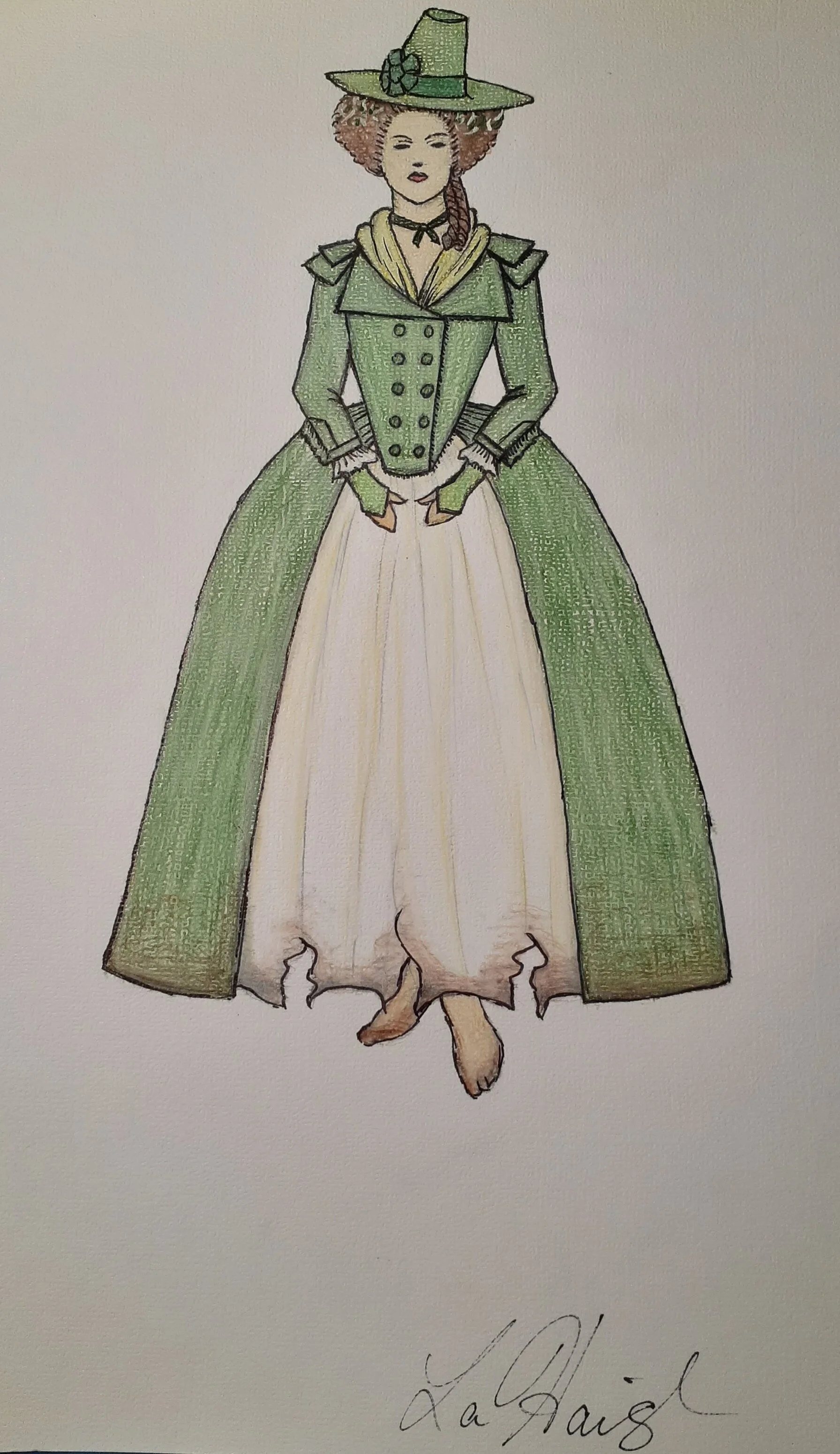
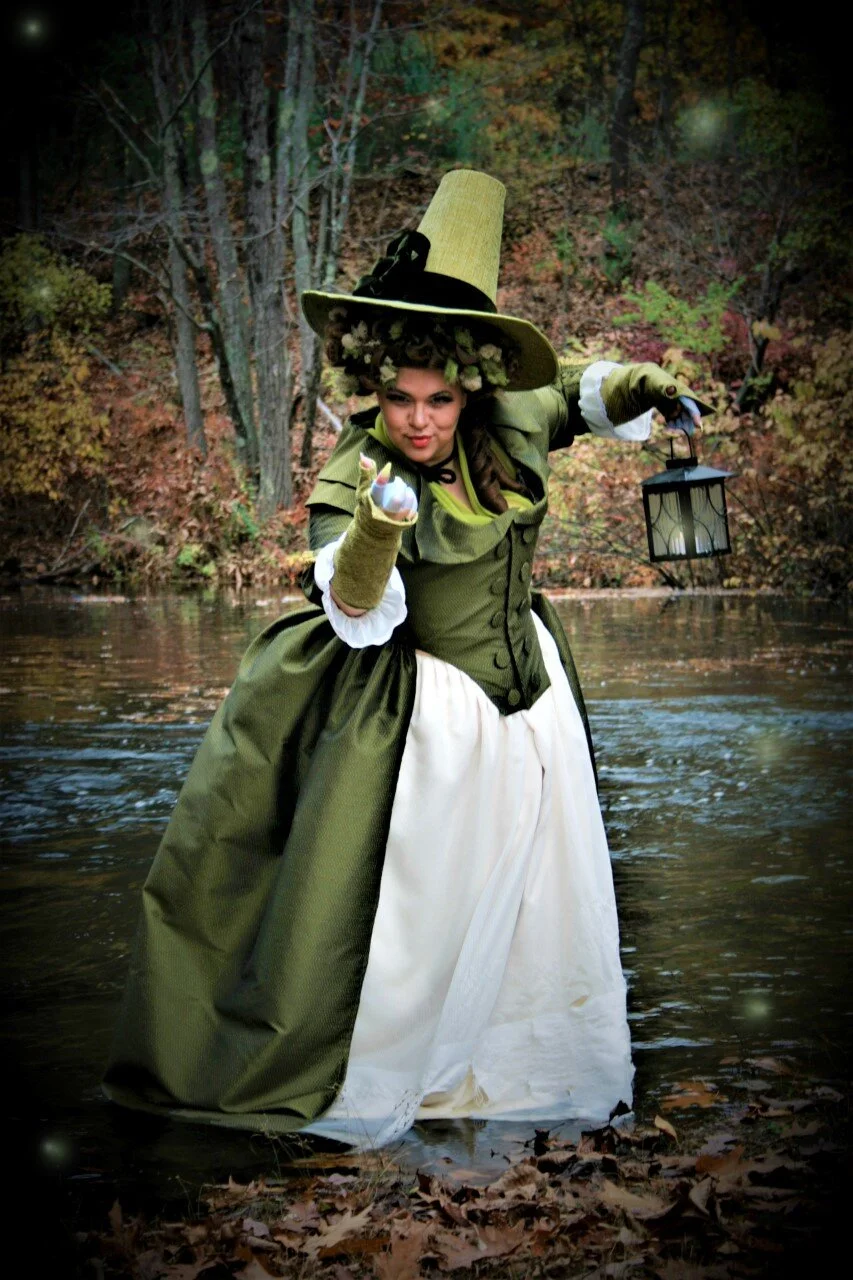
Design Concept:
I've been interested in late 18th century clothing recently, and liked the way a redingote's collars and lapels could be used to mimic gills and carapace of a swamp monster. Thinking more about the genesis of the style, I've settled on a concept of a woman that had been out riding in the woods, fell victim to the creatures of the nearby waters, and has now become the monster that lures in drowning victims. I'm hoping to subtly incorporate fins and scales into the trimming of my garment, as time allows.
Lorien H.

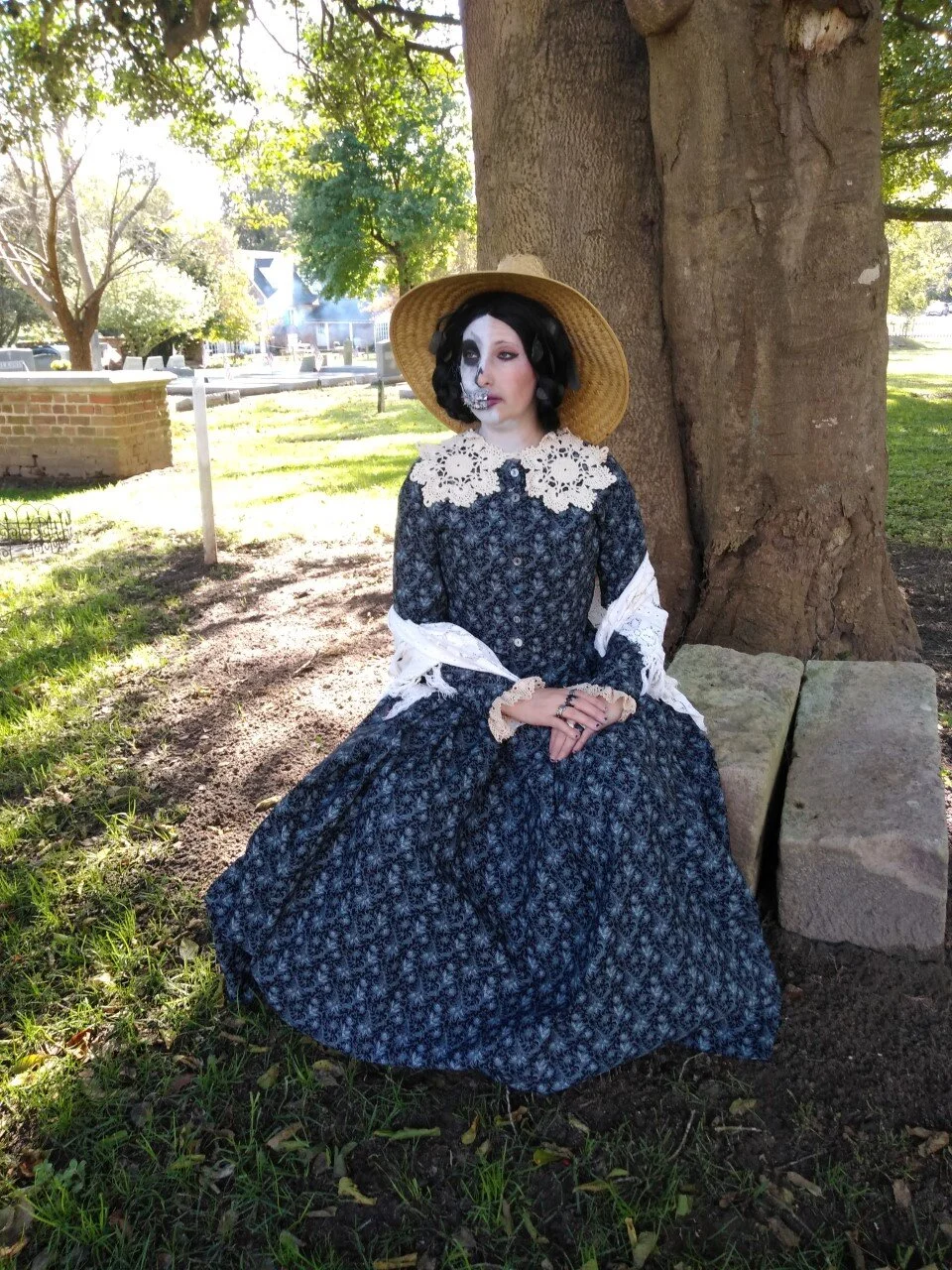
She is frequently portrayed in Hampton Virginia ghost tours by my model, Bethany Brooke.
No photos are known to exist of Hannah. Her birthdate is also not recorded. The city of Hampton was totally burned and no early structures remain. The reconstructed St John's Episcopal Church graveyard contains a monument to Hannah that records her death in 1871 in Hampton. She was instrumental in alerting the Confederate forces about the coming attack by the Union forces in the Battle of Big Bethel in the Peninsula Campaign of the Civil War.
The ghost tours were held in October, near St, John's Episcopal Church in downtown Hampton. The Hampton History Museum is across the street from the graveyard. They have a dress on display that belonged to a governess during the Civil War time period. Hannah was a governess before her marriage. She was living in Hampton with her husband, George, and her children at the time of the war. Her husband had taken the children inland to safety before the conflict and she and her brother, Robert, were gathering household goods in preparation to follow them. The advancing Union troops came in the early dawn and Hannah ran along the wooded trails and byways to avoid being caught.
Barbara M.

Design Concept:
The inspiration comes from both history of fashion and cinema costumes, though it's not a replica of a specific design. The concept came as I was trying to find out what to do with silk chiffon leftovers from several orders from the last years. I make a costume from Star Wars that requires less than one lot of fabric, and buying the lot is slightly cheaper. So I stored all those one to two meters leftovers away. Some of them were white, others ivory, some of them were perfectly pearly and smooth, others matte and more crepe-like. I wanted something that could use their differences as a positive addition to the design.
I wanted something that could make both the ghost and the vampire bride. Some inspiration came from the 1890s aesthetic movement gows, some from Klimt's work, for the initial idea of the swirls, and some from the 1890s Medici collars. late 1890s are my favourite historical period, almost everything I make has something to do with them. Edwardian dressing gowns and Worth's use of light materials to contrast the most defined shapes had a role too, as well as paintings of the Aestheticism. I was also inspired by Crimson Peak, Bram Stoker's Dracula, and Titania's cape by Gabriella Pescucci, from Midsummer Night's Dream. I basically wanted to design something that could have its place in a vampire movie set in 1890s, but focusing con the otherworldly aspect of the character.
Chiara V.

Design Concept:
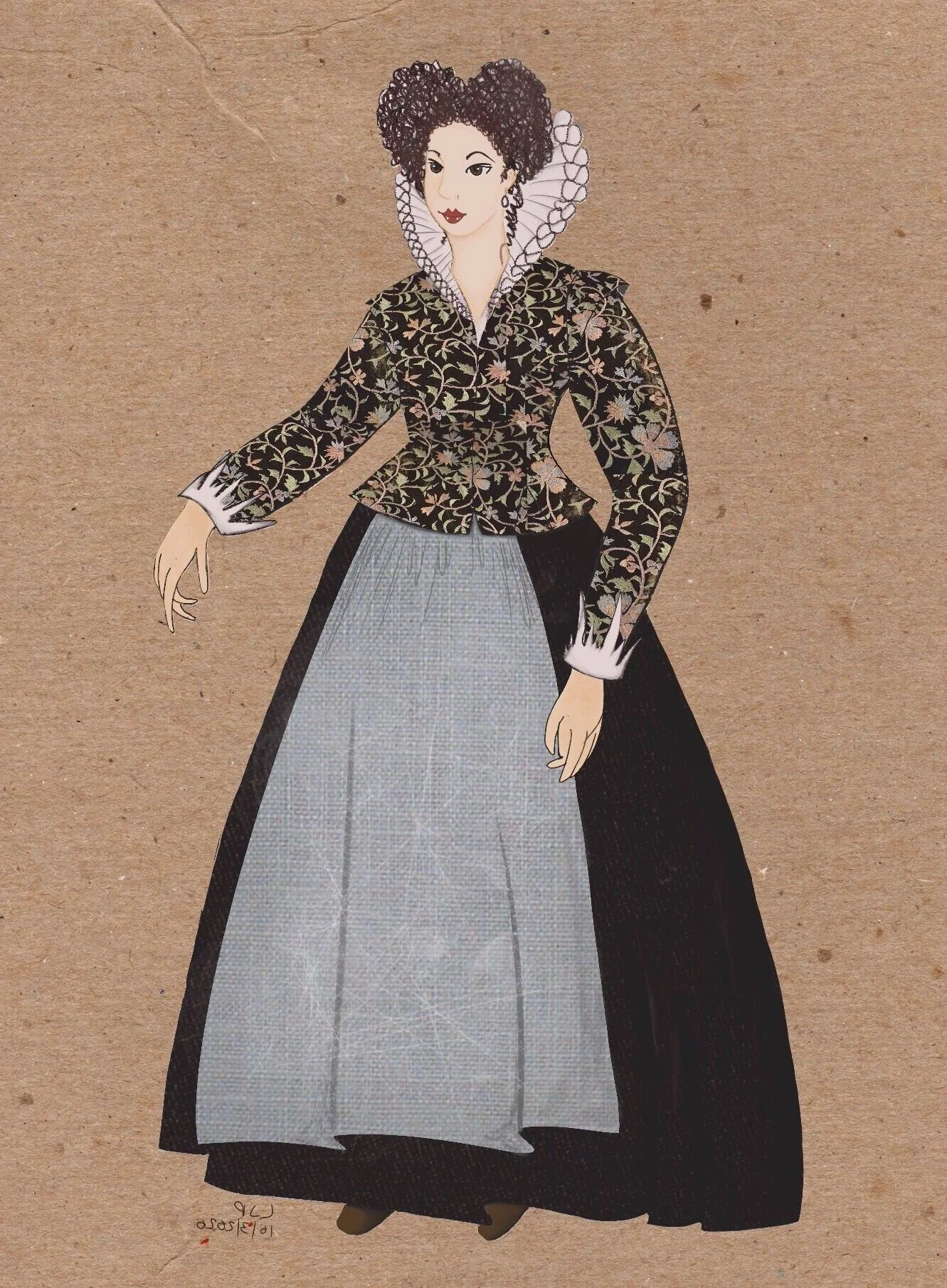
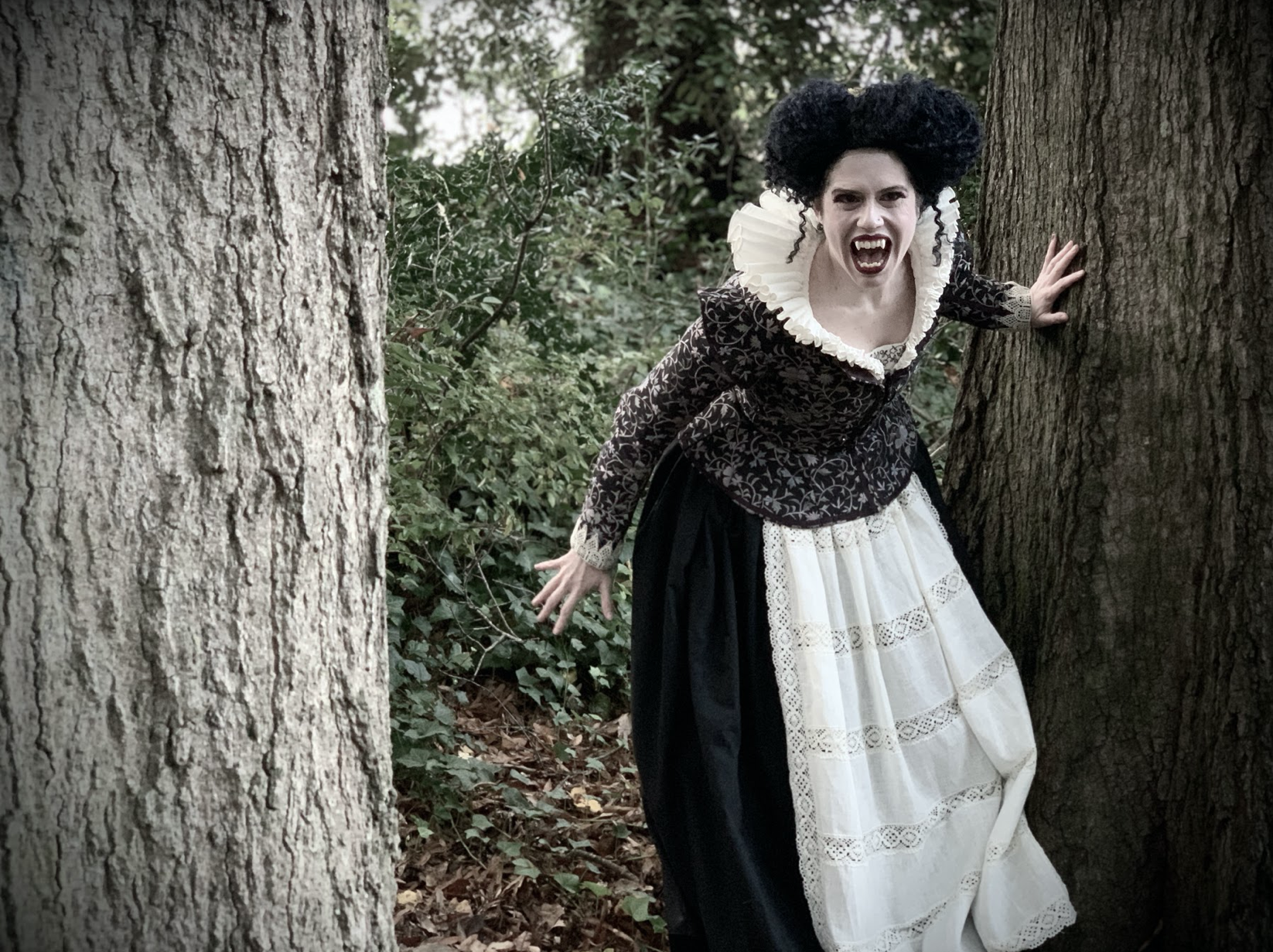
Early Modern Vampire. The costume itself is a fairly standard early modern ensemble - based loosely off of Robert Peake the Younger's portrait of Margaret Arundel, Lady Weston. Rather than the closed ruff in the portrait, I'll be subbing in an Italian-inspired open ruff, which will give me greater flexibility to add stage blood down the front of the face and neck in the photo shoot.
The goal is to work primarily from stash fabrics - I've had this pink embroidered silk in my stash for years, and had already made a waistcoat out of it. I had enough yardage for another waistcoat, but don't need TWO of the exact same ones - so I threw it in the dye vat to see what would happen:
Laura P.
Design Concept:
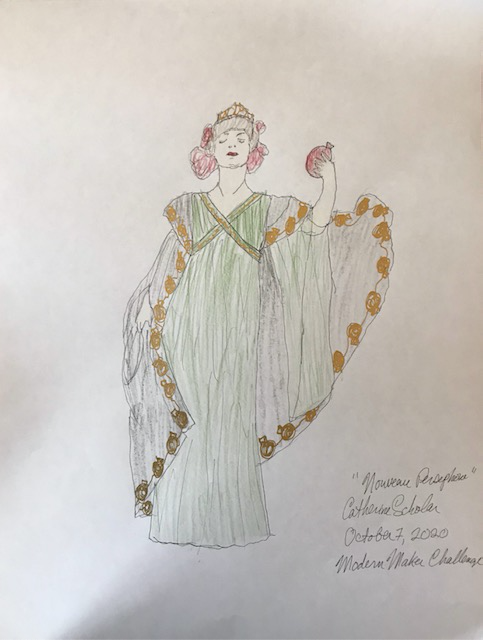
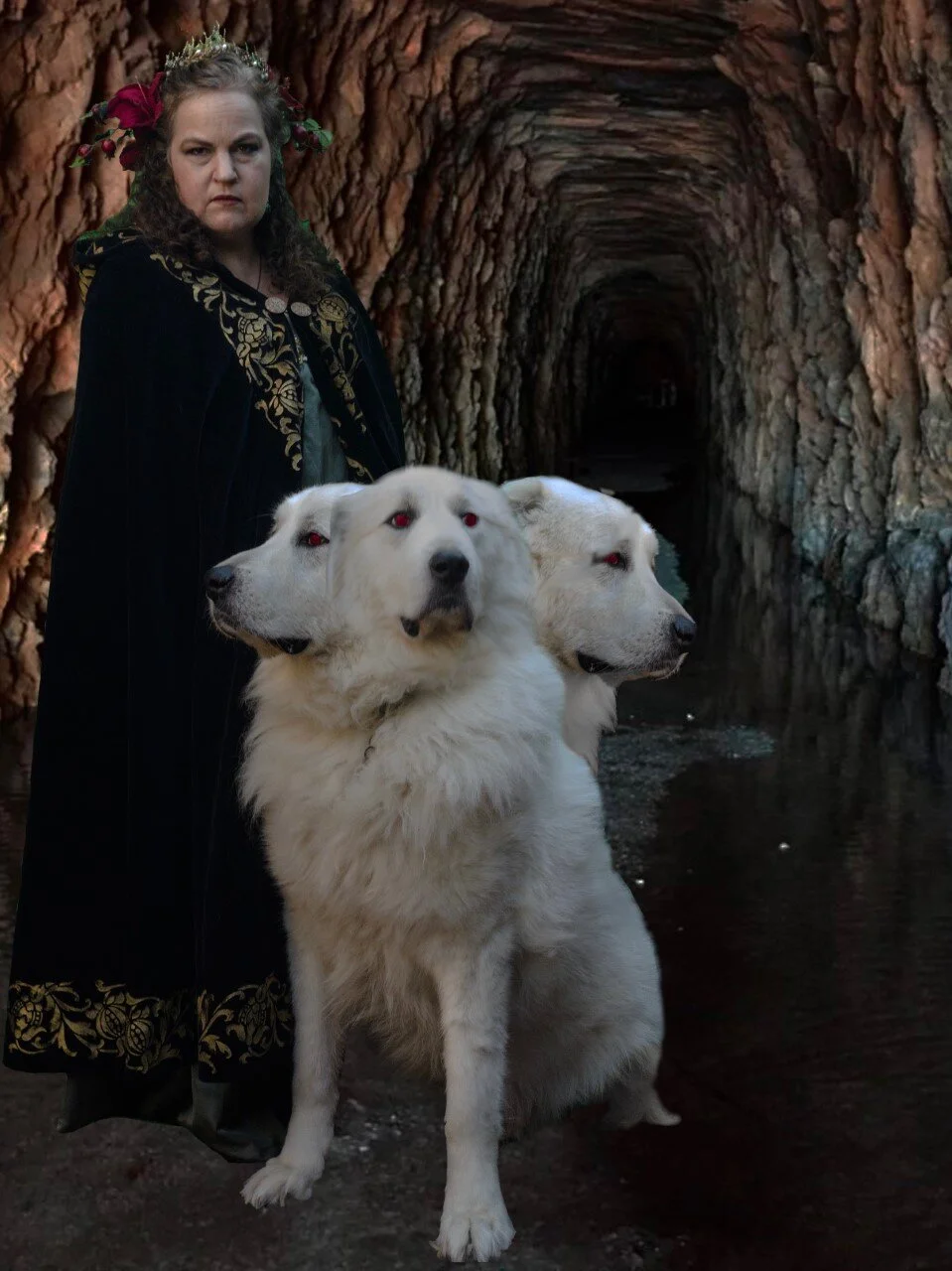
Art Nouveau Persephone, circa 1900. This was a time when women’s roles were on the cusp of huge transition. I am drawing my inspiration from Mucha, Liberty, and Fortuny. All three artists re-defined how women were depicted and clothed… and by extension how they behaved. The loosening of women’s clothes mirrored the imminent loosening of their societal cages.
I am planning two garments: a Liberty of London-inspired Grecian gown in nile green silk/cotton sateen and silk chiffon, with gold trim. Turn of the century ladies magazines described this style of gown as either evening wear or stage/fancy dress. The loose “goddess” styling and spring green color evoke young Persephone, the goddess of spring. https://manchesterartgallery.org/collections/title/?mag-object-17163
The second garment is a Fortuny-styled burnoose cloak in black velvet stenciled with gold pomegranates. This queenly cloak evokes a more mature, womanly Persephone, in her role as queen of the Underworld. Is this heavy, encompassing garment, and the role it represents, a burden or a badge of honor? It’s up to Persephone to decide. https://augusta-auction.com/auction?view=lot&id=14060&auction_file_id=30
The visible green gown beneath the cloak shows the layers in every woman’s soul… the young woman that’s still inside the older one.
Catherine S.
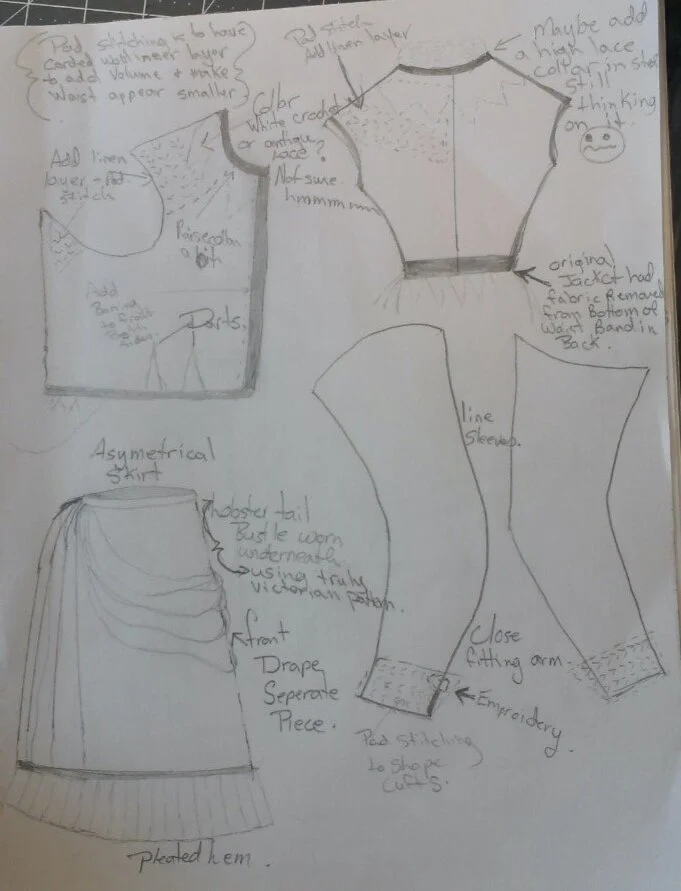
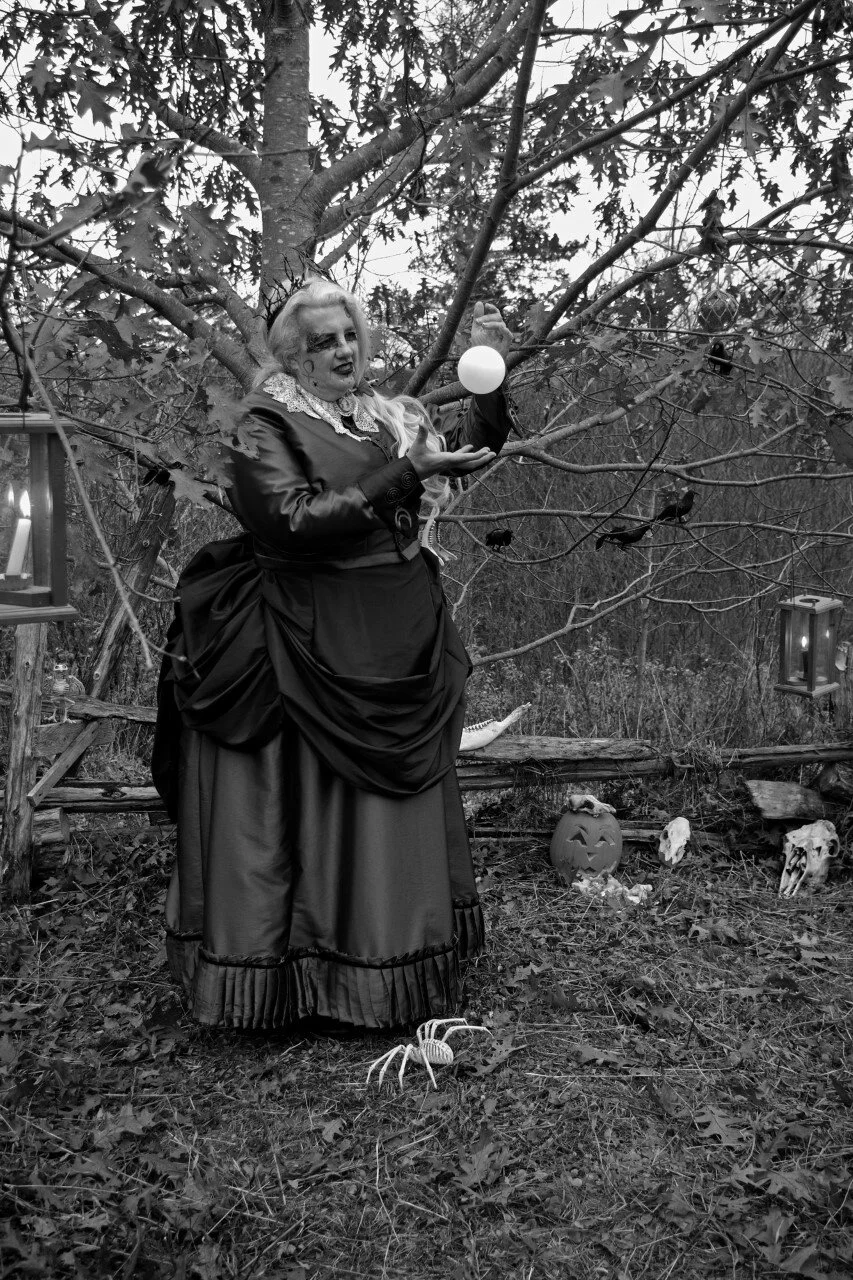
I am no artist when it comes to drawing and telling a story of a fictional character is something I find more than challenging, so this will stretch my brain a bit. When this project is complete I will be telling the story of Carman, a Celtic witch, and what she represents. I want to do this in Victorian clothing dating from late 1870’s early 1880’s though with Subtle hints to a Celtic root and witchcraft. The embroidery design will be Celtic symbols used in witchcraft, and there will be signs of destruction and black magic as well as a head piece made of oak twigs, I hope. If you are not up on your Celtic folklore Carman is a witch who practices black magic and she is a tad destructive. Carman is often depicted as a beautiful young woman with a stunning figure and dark hair. So let's step ahead a few hundred years into the Victorian age and she has gained a few pounds, has white hair, an orange cat and time has only made her attitude worse.
In closing I would like to leave a rhyme in your thoughts from, Michael Aislabie Denham's Proverbs and Popular Saying of the Seasons (London, 1846) , about what crows mean
One for sorrow,
Two for mirth
Three for a funeral,
Four for birth
Five for heaven
Six for hell
Seven for the devil, his own self
Bernadette F.
Design Concept:
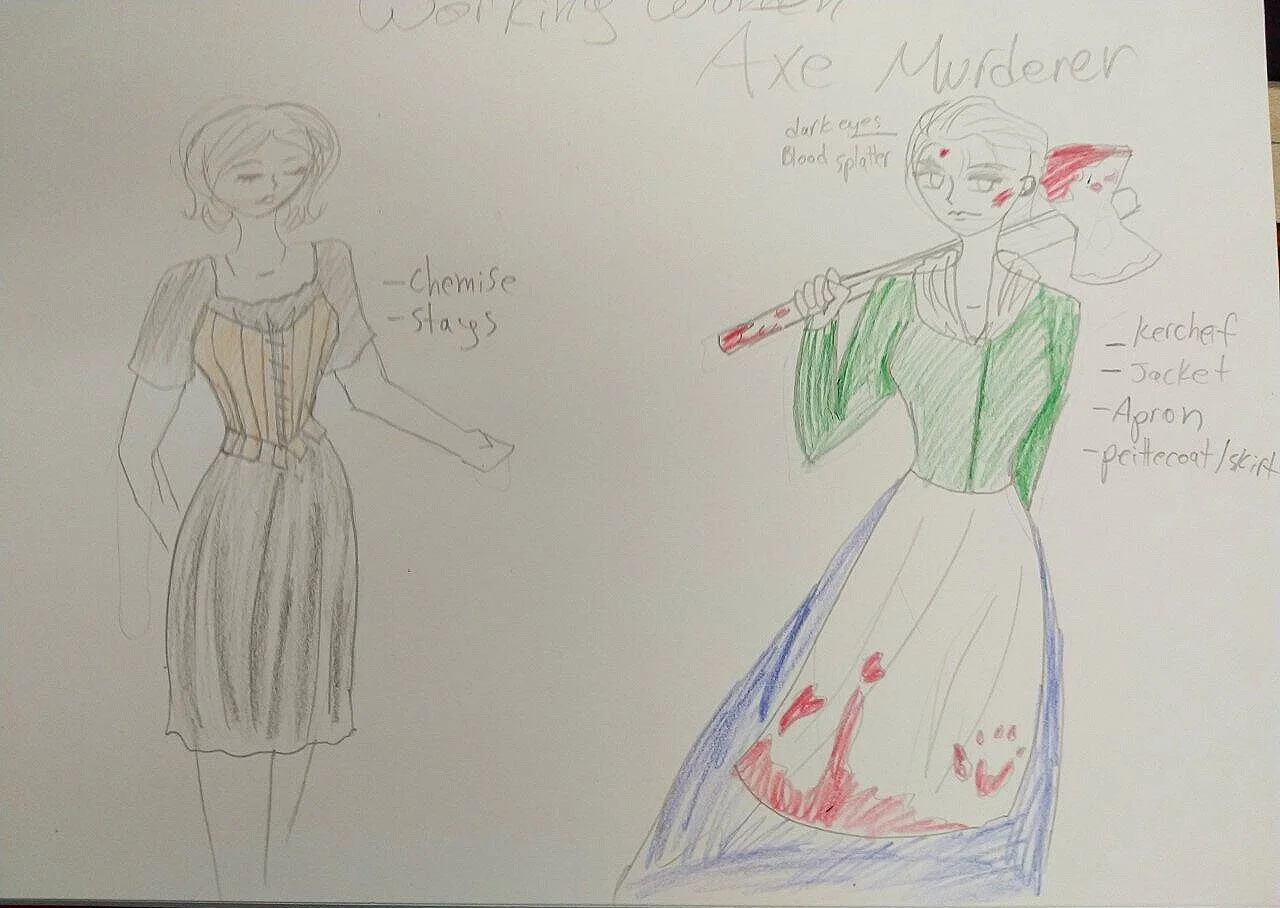
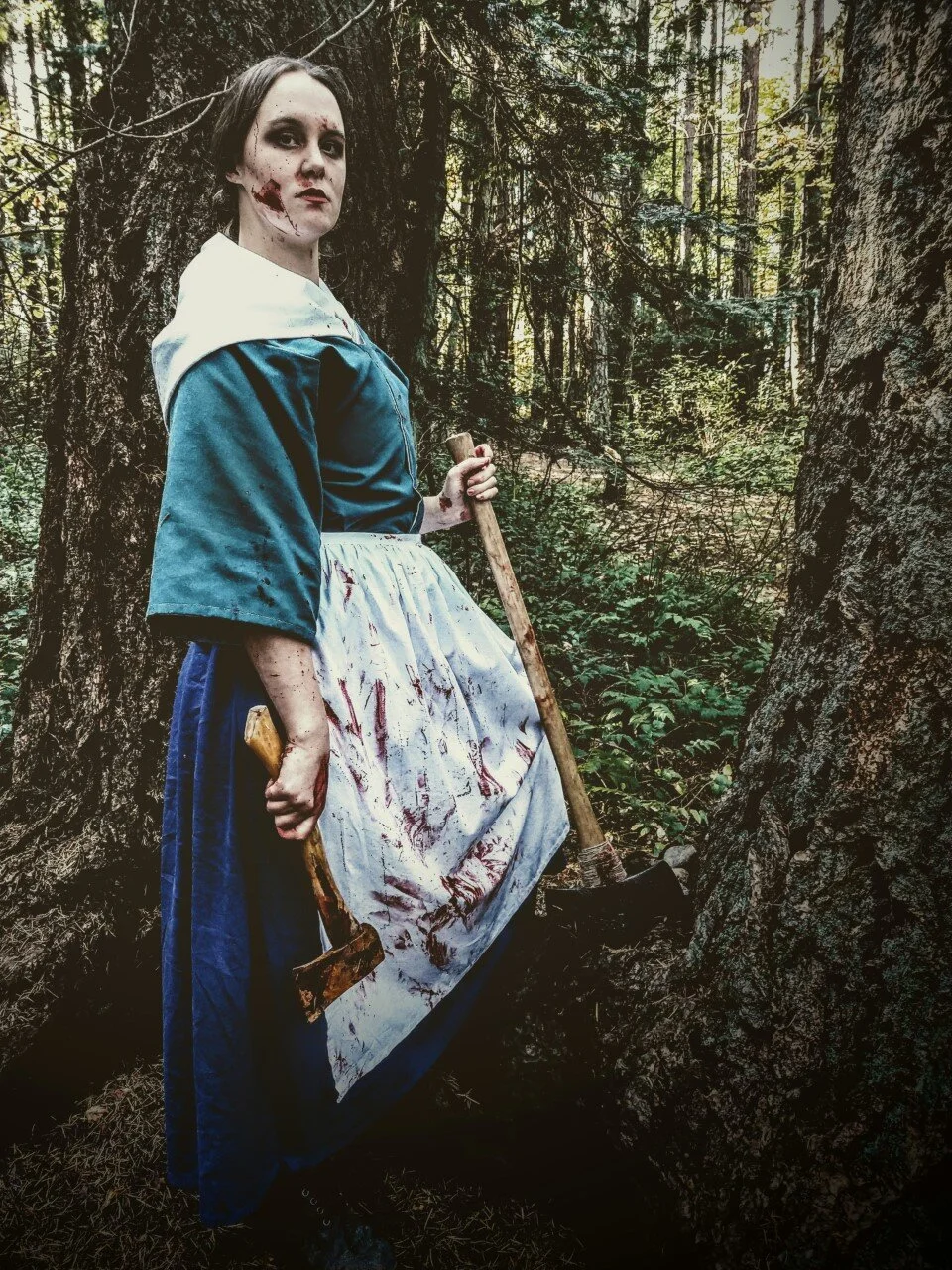
Living in the 18th Century was hard for anyone, harder still for a young single woman working a small family farm. Long days and dark nights blur together in the dizzing dance of monotony as she tends her chores. Life becomes an endless parade of greys and browns as the seasons pass with no sign of change nor opportunity. It is autumn. The scent of decay is heavy in the air as leaves litter the ground. It is dusk when the stranger opens the gate. The hinges creak loudly in the still evening air. Not expecting any guests, she comes to the door. The man shouts, running towards her in an inexplicable rage. Startled and afraid, she reaches for something to defend herself. Outside the door, her faithful companion, The Axe, is ready. And she discovers, there is still beauty to be had in the world, and that it is a deep, deep red.
She returns to her daily life, but the Thrill of that night beckons her. On deep autumn nights, she stalks the woods for wayward travelers and lovers, painting her world with the beautiful sympony of screams and crimson.
Sarah G.
Design Concept:
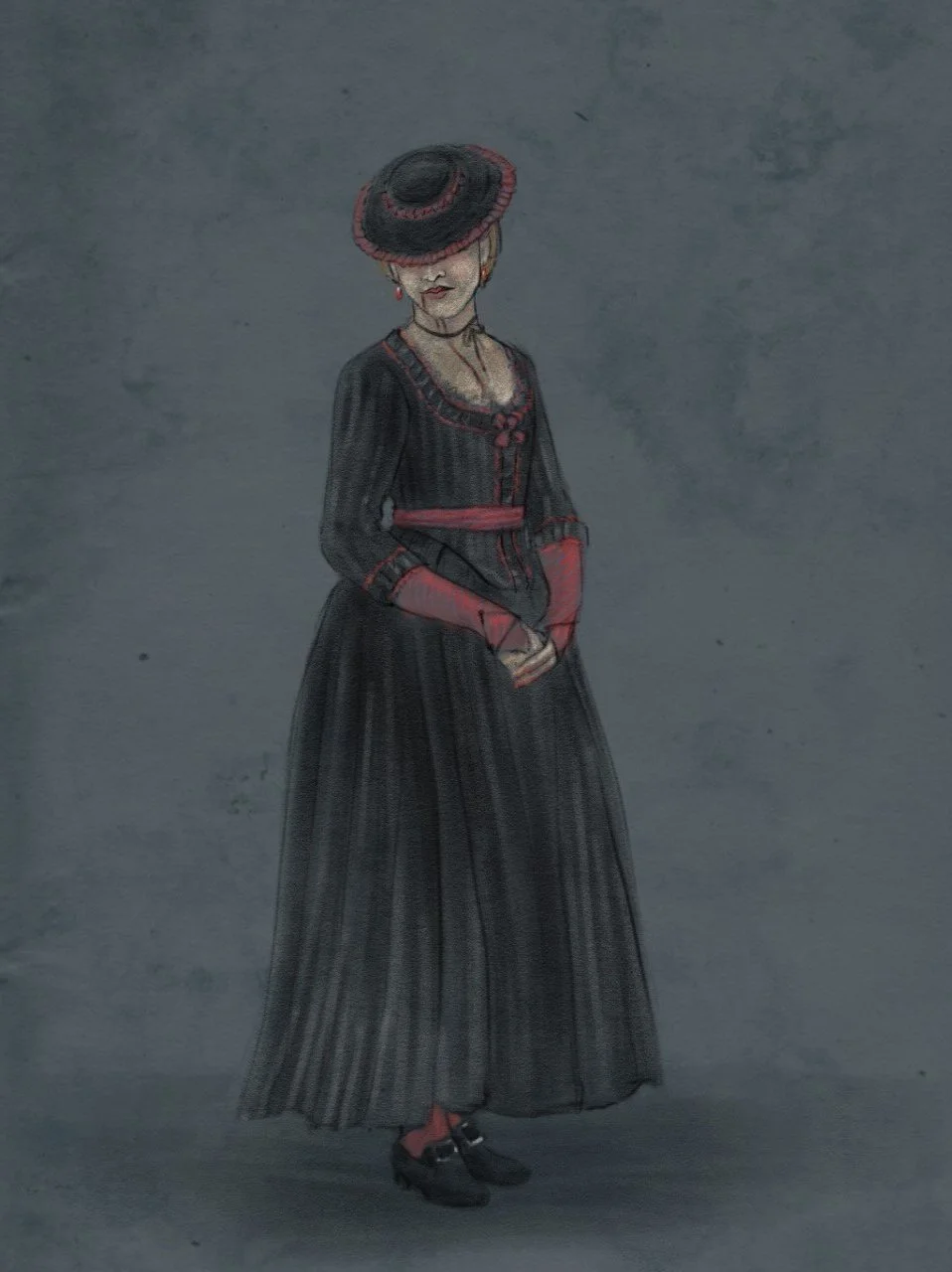
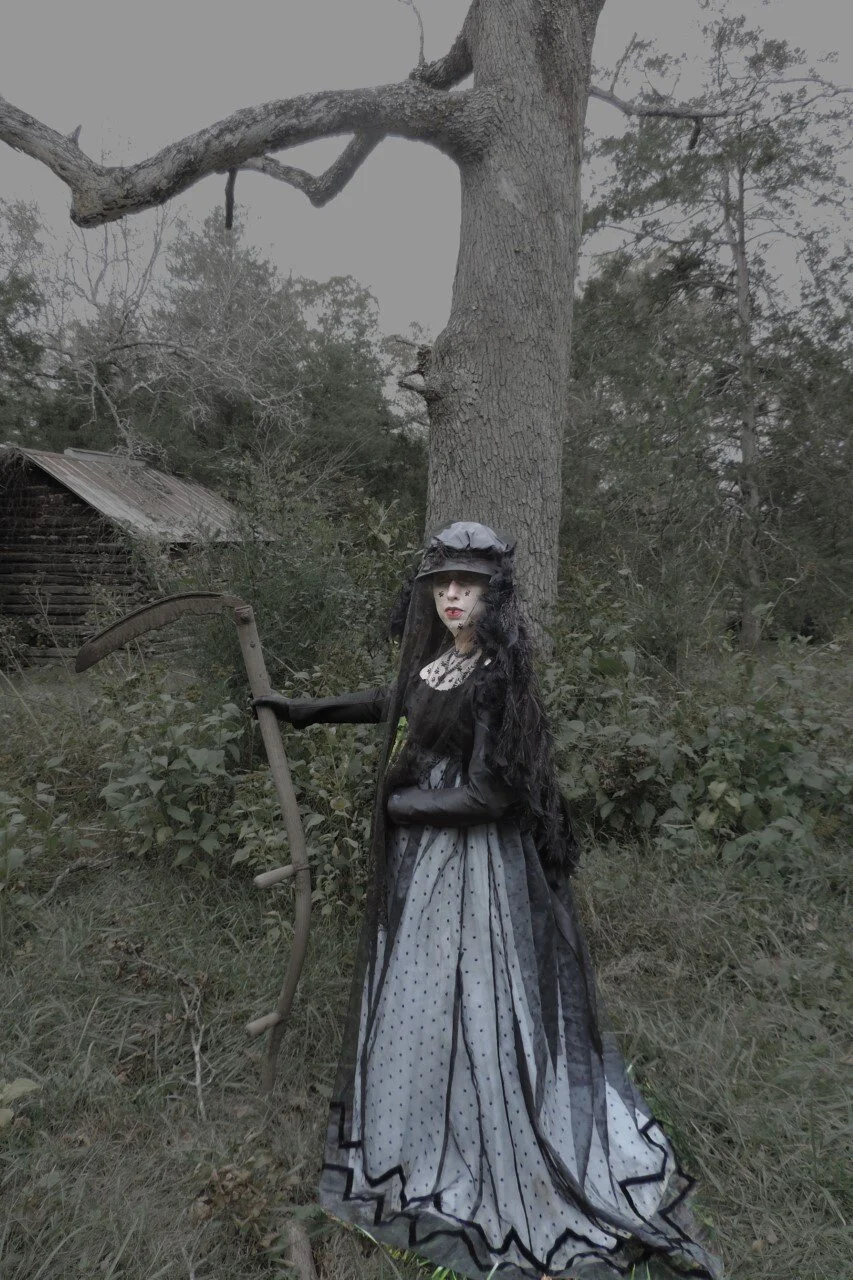
My concept is a costume that reads as pretty standard late 18th century, apart from the color and the line of blood. The closer you look (and the closer you get) the more you realize how much trouble you’re in. It’s a look for a black widow who is probably the cause of death of whoever she is meant to be mourning.
Alexa D.
Design Concept:
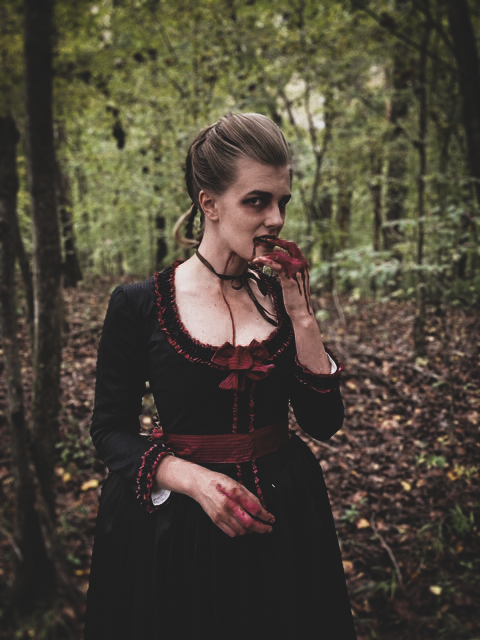
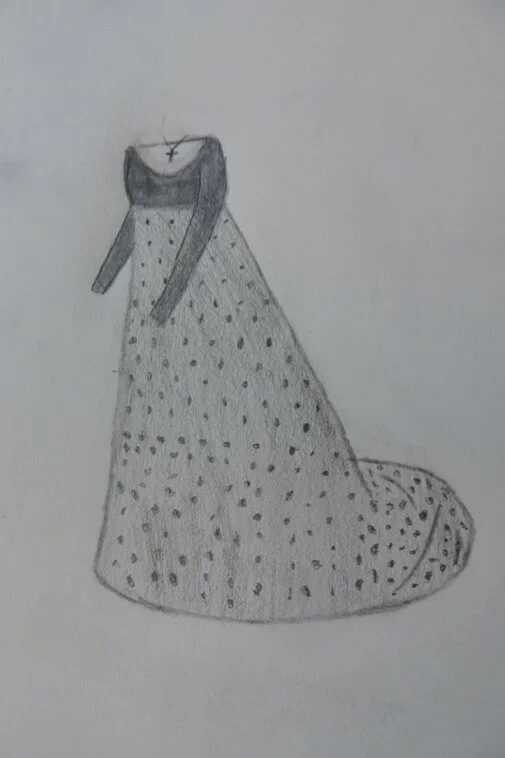
I plan to use an original mid-19th century black silk carriage parasol with this look. Though a bit small for the Recency era, it is black and silk and will look the part. One of the two bonnets for this piece will be trimmed with black ostrich plumes reminiscent of the large black plumes worn on funeral horses in the 19th century. Both bonnets will be ornamented with original lace veil.
A short train has always been part of the idea for this look. Fabric of polka dotted silk organza.
Danielle P.

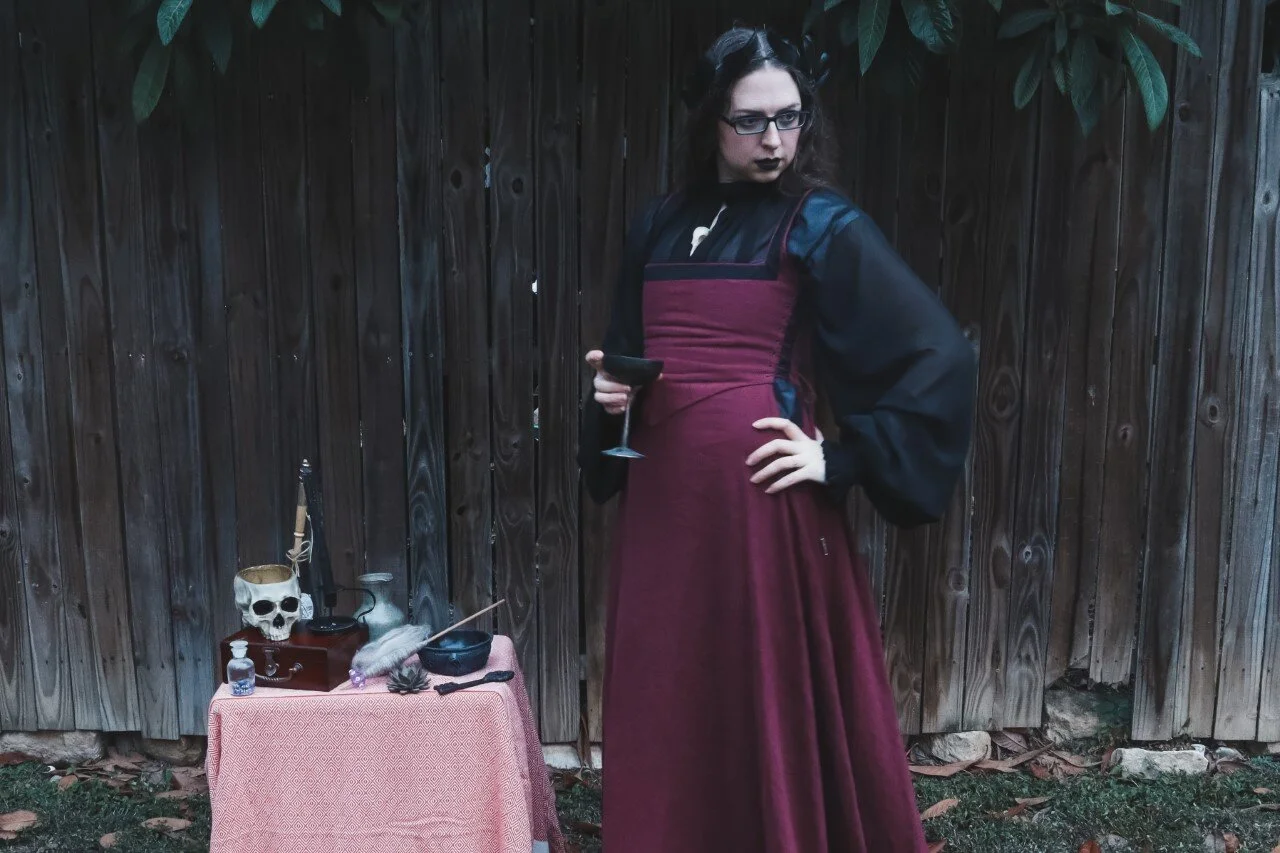
Design Concept:
I’m interested in exploring the late Tudor/ early Elizabethan working class through a modern goth and aesthetically witchy lens. I’m also interested in creating a cohesive outfit with items I already own, items I own and will be altering, and creating new pieces to bring everything together. I plan on using a mixture of modern and period materials and techniques to create a seasonally appropriate gothic Tudor witch.
Courtney P.

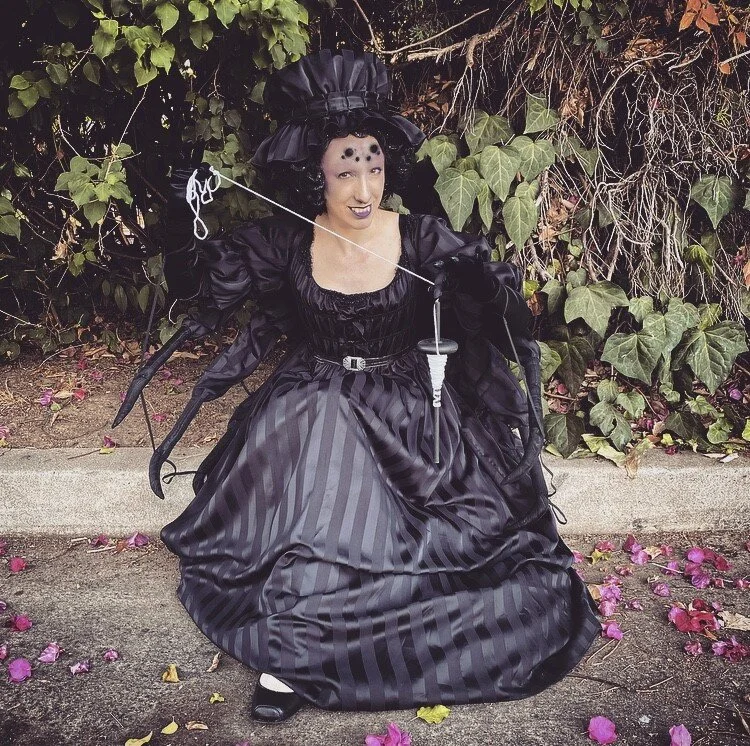
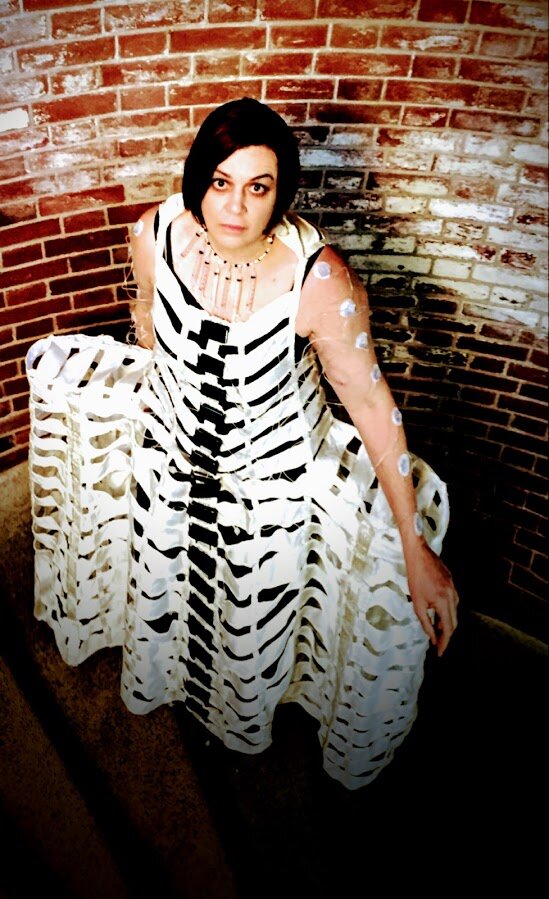
I originally started making the dress several years ago after I found a striped chiffon in a remnant bin that was reminiscent of a favorite portrait. As sometimes happens I ended up finishing the dress several years later, adding a purple underlining and then made new, bigger sleeves. When I was brainstorming for this contest, it occurred to me, “what if the extra sleeves were arms?” After reading some variations of the Greek myth about Arachne, I decided to go with the spider theme. I had just enough fabric to make more sleeves and a matching hat.
Kelly C.
Design Concept:
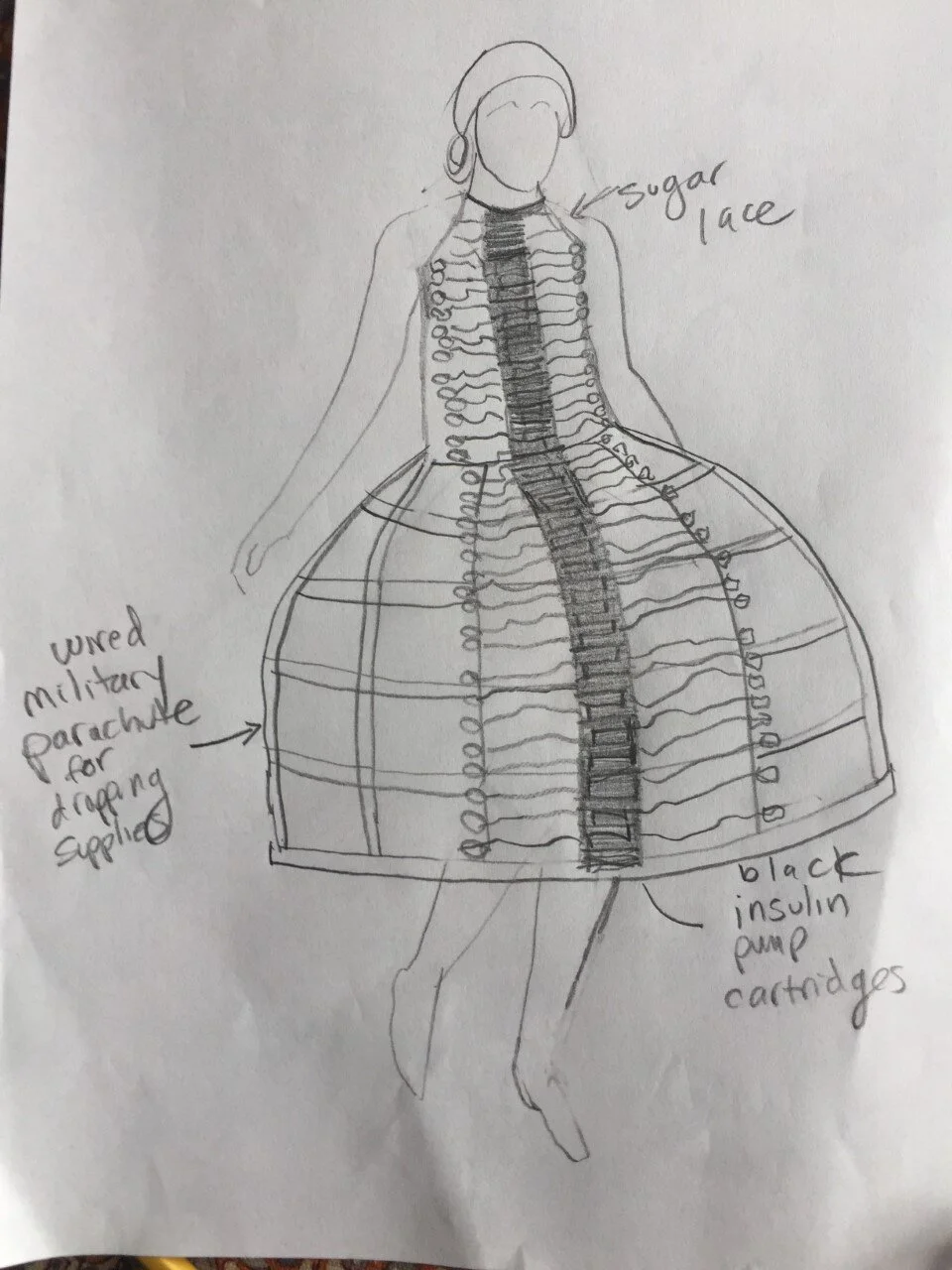
The concept I’m playing with is a connection between the 1920’s and 2020. I have type 1 diabetes and my life has basically been saved and enslaved by insulin which was discovered and put into use in 1920. The Nobel Peace Prize was awarded in 1923 to Frederick Grant Banting and he made the patent free. Today insulin is embroiled in the fight for health care, and diabetes is one of the most expensive pre existing conditions. Without health care many diabetics can not afford to stay alive. Most insurance companies don’t cover testing supplies at all.
In 2020 I started using an insulin pump which creates an enormous amount of waste. I am always looking for ways to reuse materials for costumes and I have saved all of my insulin cartridges for this project.
I also acquired a military parachute used to drop supplies to soldiers which I want to use as a base since insulin has saved many lives since 1920.
My design is loosely based on the Robe de Style, using the parachute as part of the skirt and using the pump cartridges as embellishments in the front and back. The open structure of the parachute lends itself to a cage crinoline.
Karen F.
Design Concept:
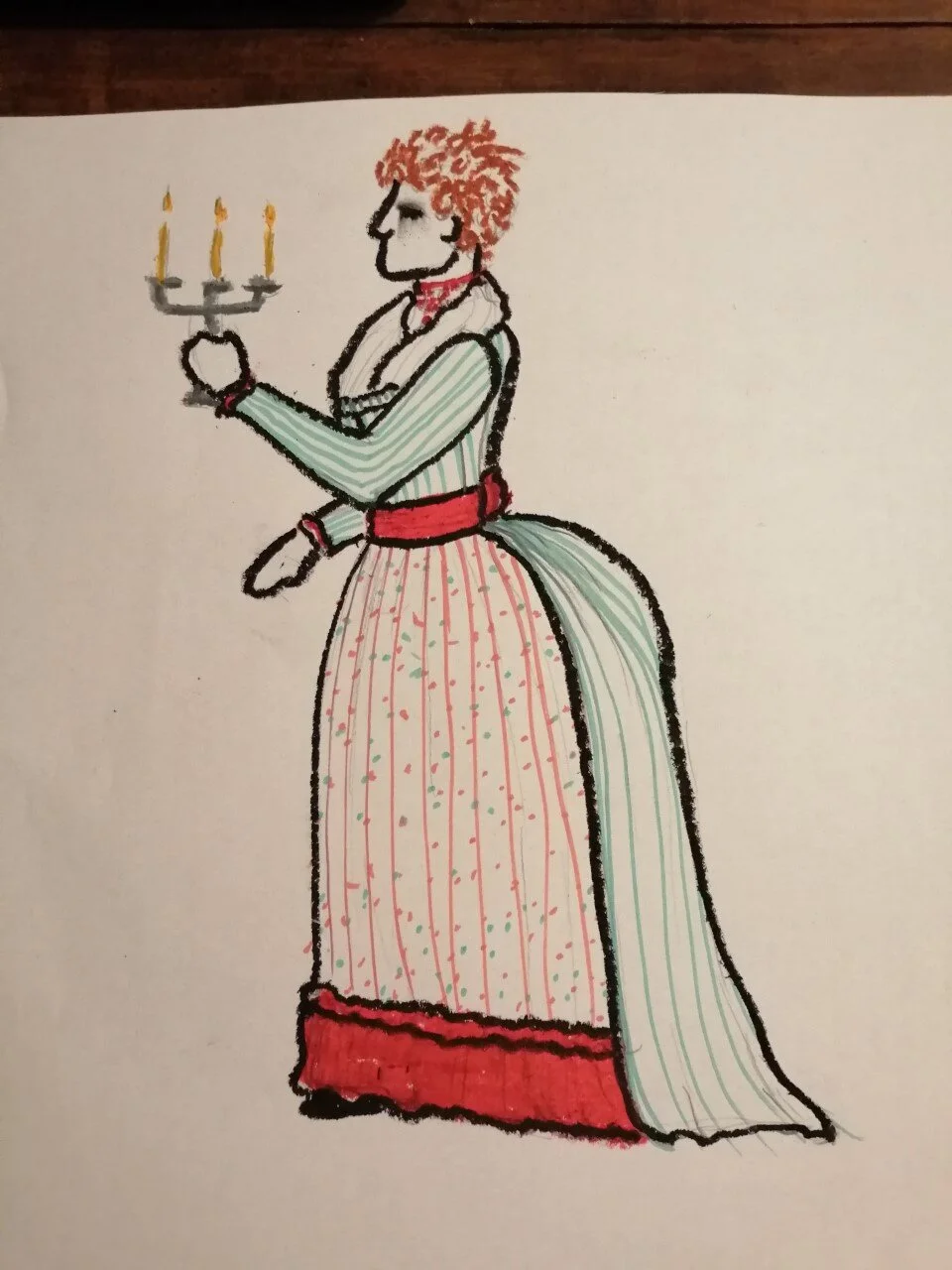
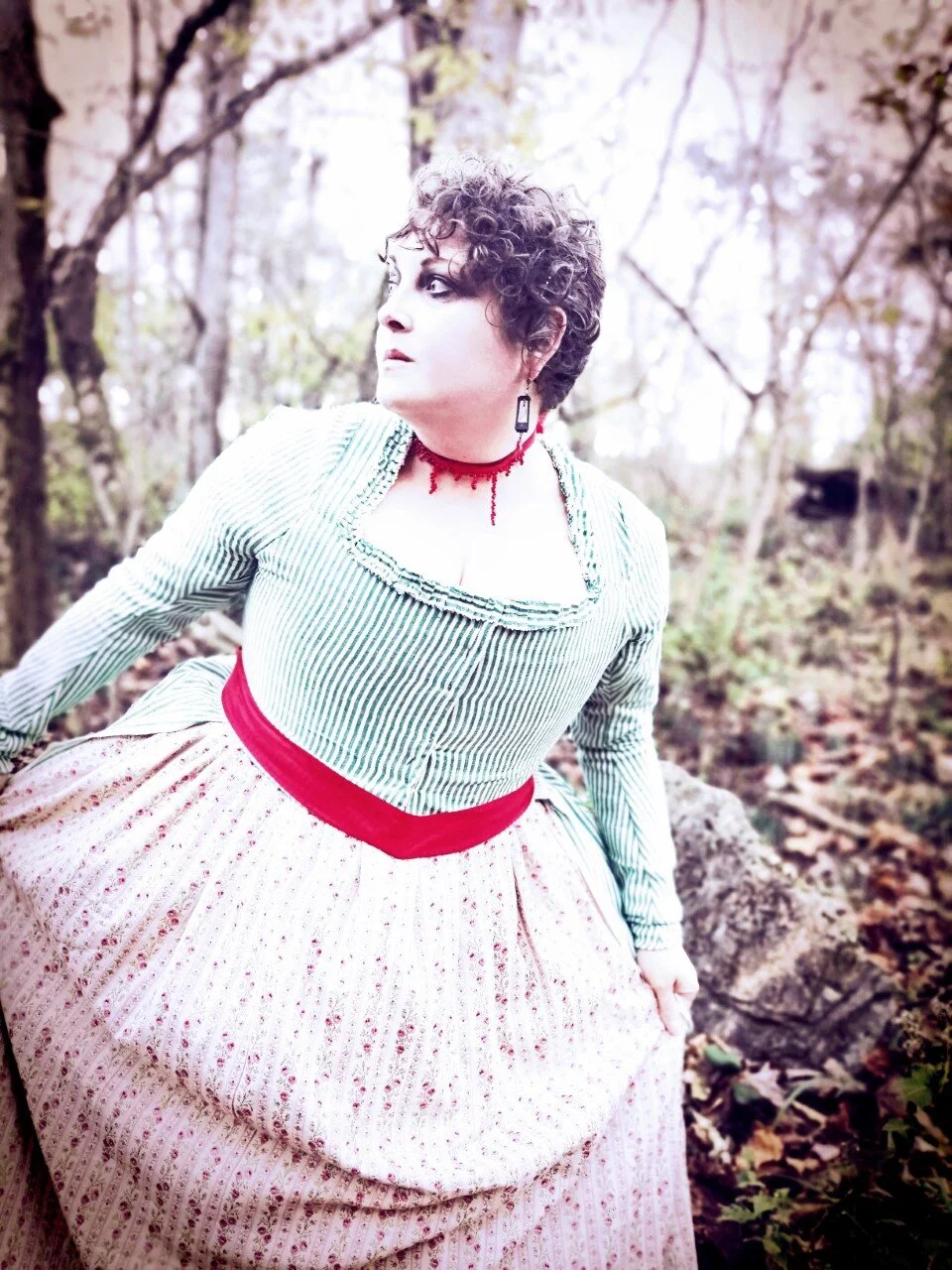
Historical inspiration for my costume comes from 1790-1794, French Revolution Aristocracy. I'm taking fabric and construction inspiration from contemporary fashion plates, and extant garments. I'll also be using images, notes, and patterns from "Patterns of Fashion 1" by Janet Arnold, "Costume Close-up" by Linda Baumgarten and John Watson, and "Costume in Detail" by Nancy Bradfield, although, the final garment will be drafted and draped by me, and won't fully from any of the books.
I'm making the outfit macabre and Halloween ready by turning myself into the ghost of a beheaded French Aristocrat. My hair is short, and perfect for the shorn-off and messy "Titus" style begrudgingly worn by those who knew the guillotine personally. I will make myself up to have pale skin, and dark, haunted eyes. I will also be fashioning a red ribbon and bead necklace, tightly fitted around my neck to look like blood coming from the cut on my severed neck.
Jennifer M.
Design Concept:
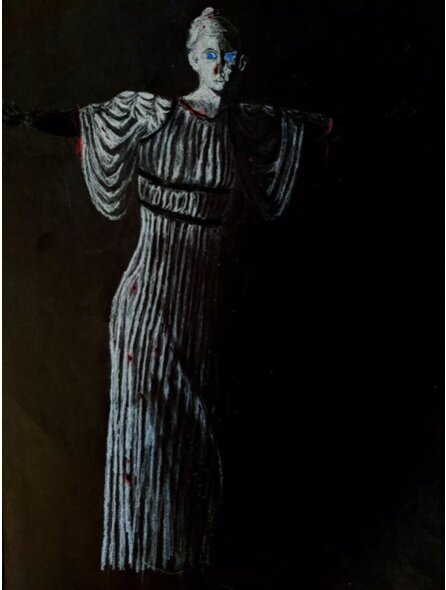
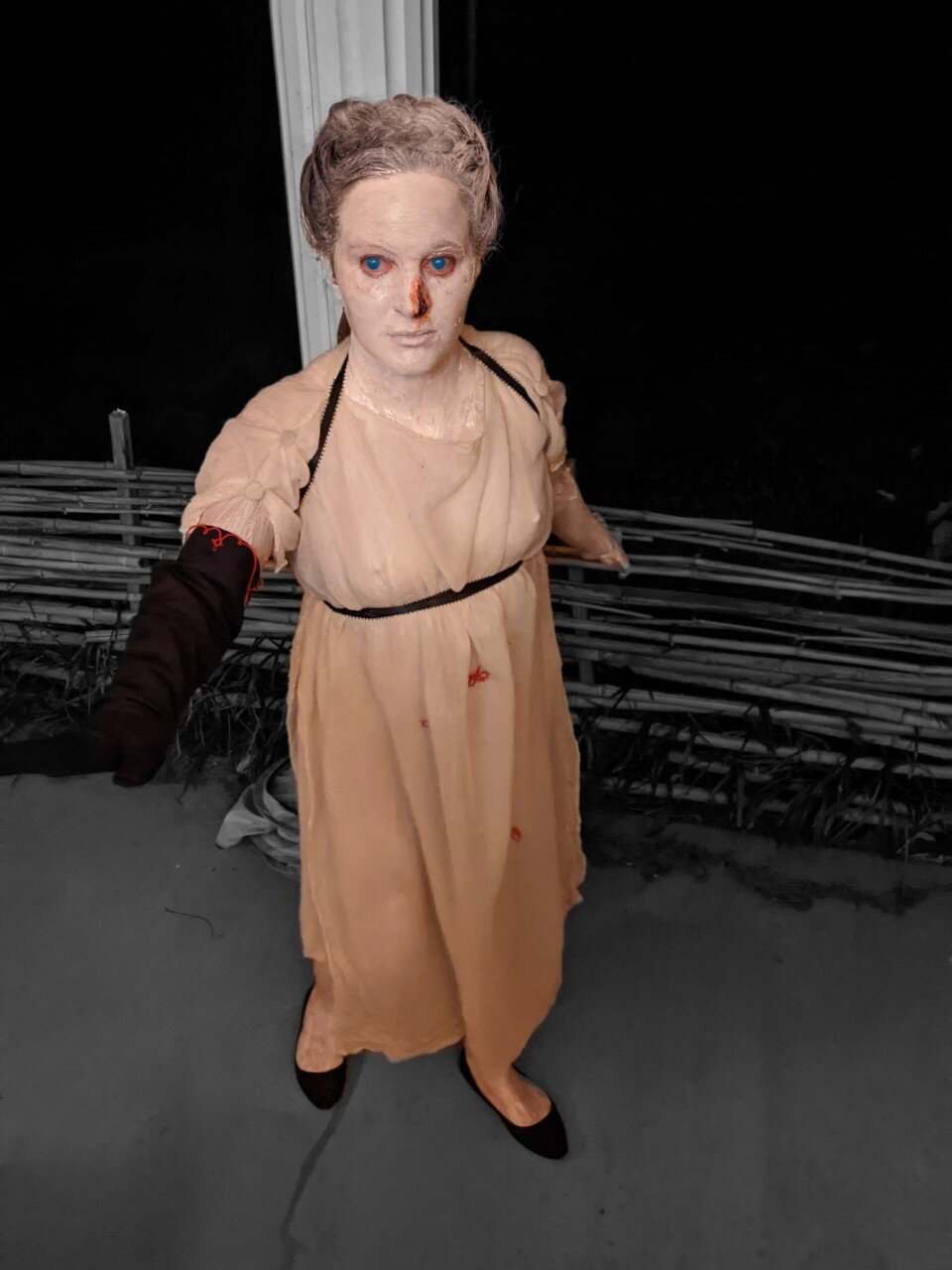
The Fall of the House of Roma bound tight by dainty picot ribbon, the supple flesh of Roma is entombed alive in a casket of dead marble. Her limbs are cruelly broken by time, and her lifeblood drains in drops of delicate lace. For 1800 years, she has been smothered and tortured into the shape of her progeny’s desire. Her ancient ultramarine eyes blaze from the depths, pleading for mercy and hungering for revenge.
Devon M.
Design Concept:
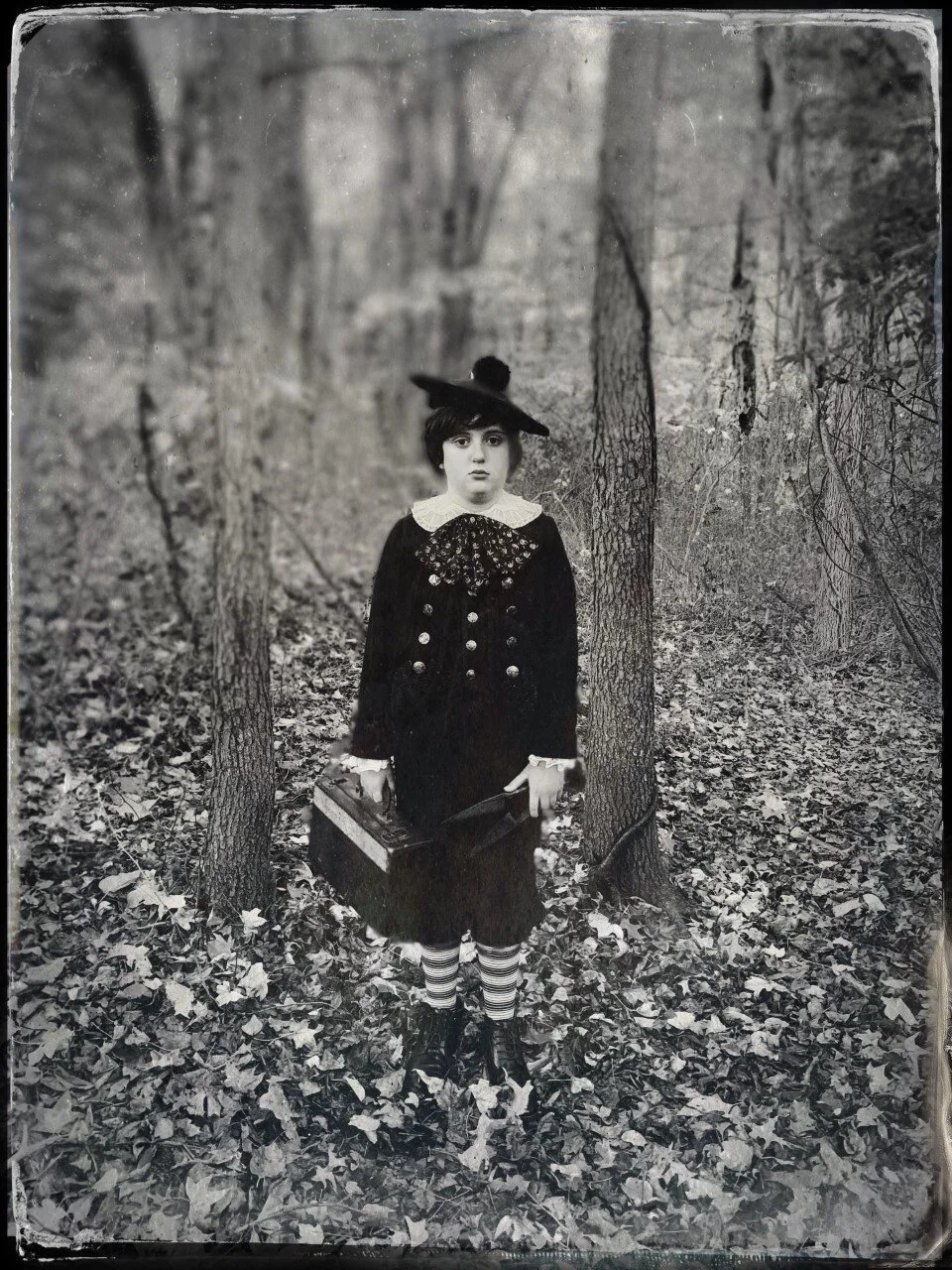
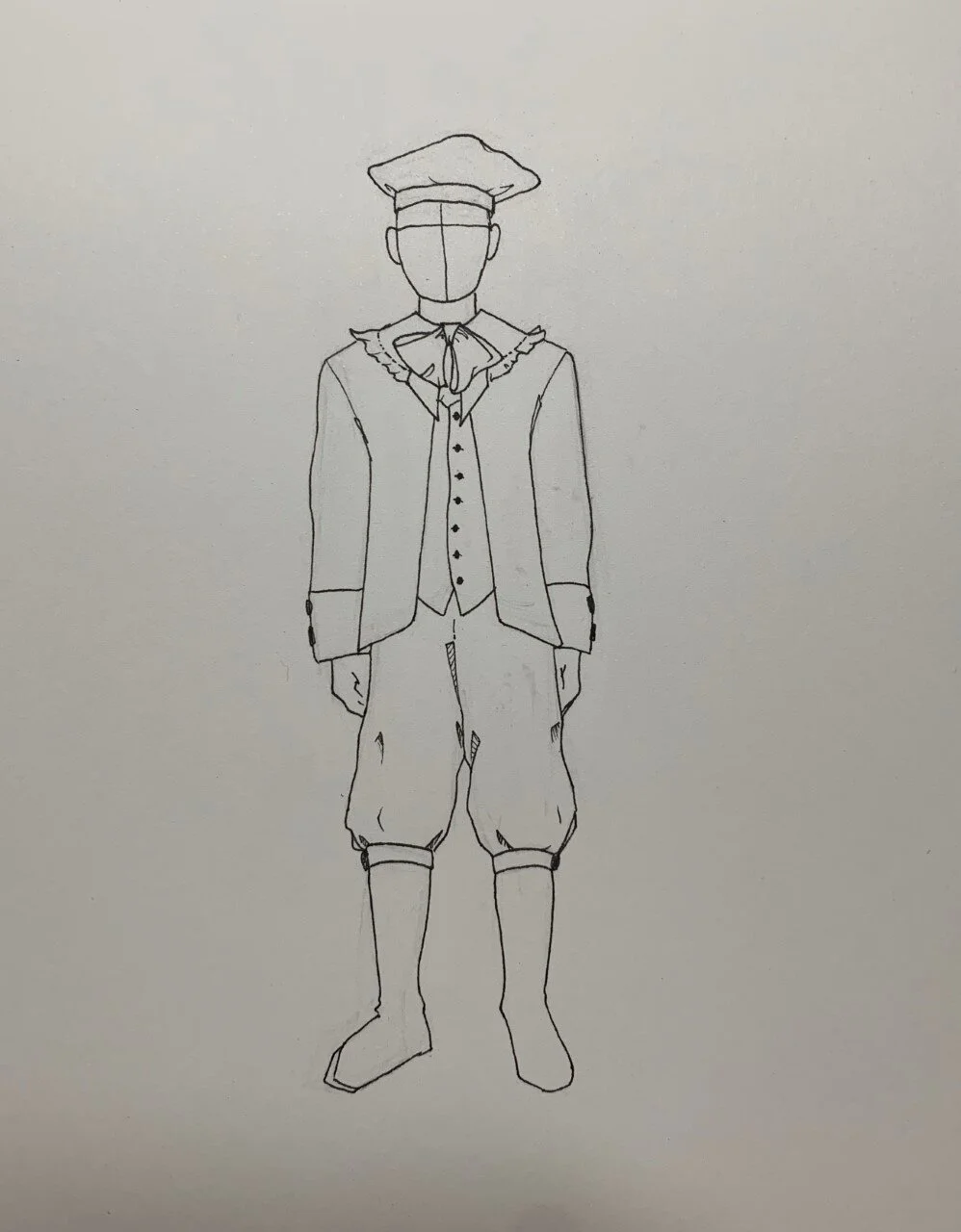
When I'm not working on costumes for theater, I make a lot of cosplay costumes for my daughter to compete in at conventions. However, this year she is away at her first year of college and I needed to find another muse. I looked around and spotted my youngest son, Ezra, who is eleven, and quite the character. Bonus, he loves dressing up and is quite good at posing! When I saw the criteria for this contest, I had the idea that I could dress him as a child from one of those sort of creepy Victorian photos. I briefly considered a post-mortem style photo, but I thought that I could make him more creepy as a strange living child. :) What is it about children that makes them so disturbing in horror movies? I thought about the Grady twins in The Shining, Damien from The Omen, Regan from The Exorcist, The Village of the Damned, and so on. So- I settled on this idea of a little boy in an old fashioned photo with various unsettling props. He will wear a dark wool suit with a lace collar and cuffs and a cap. Trims, etc. are TBD. I'm attempting to make this costume out of supplies from my stash, so we'll see what I can come up with! The design of the suit is a mish-mash of details from different vintage reference photos.